Document
Differential labor market and job quality outcomes
Postdoctoral Researcher
New York University Abu Dhabi
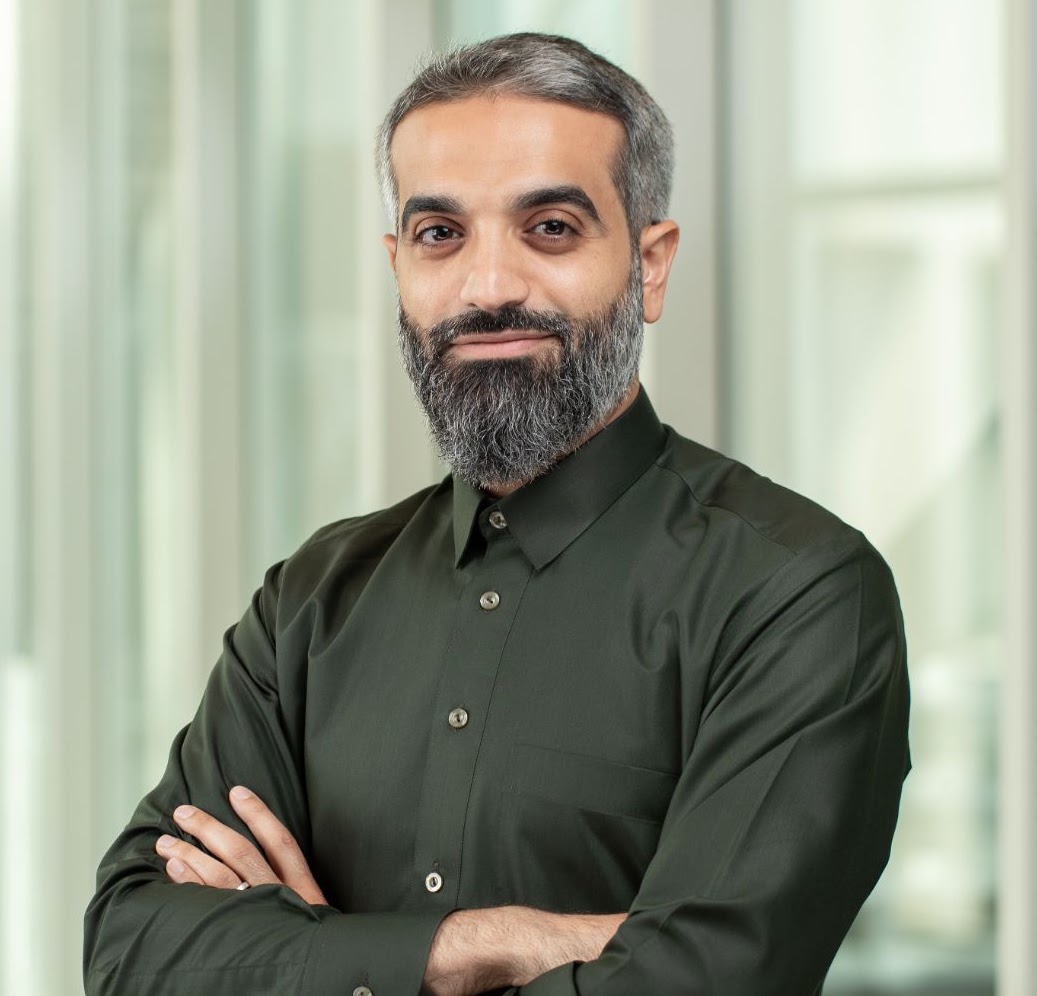
I study how institutions and organizations evaluate competing value claims, and how those evaluations shape employment outcomes.
My research sits at the intersection of labor markets, organizations and public policy. It examines access to employment and workers’ experiences within organizations, connecting institutional contexts with managerial decision making and organizational policy. Religion provides an important empirical and theoretical lens across this work, including in a related body of research on Islamophobia and the institutional treatment of religious difference.
My research program has developed from documenting differential outcomes to identifying the organizational and managerial mechanisms that produce them, and to improving how job quality is conceptualized and measured. Across this work, I generate rigorous evidence to inform organizational and public policy decision making.
Differential labor market and job quality outcomes
Organizational and managerial mechanisms shaping those outcomes
How job quality is conceptualized and measured to inform more effective organizational and labor market policies
First author · with K. Makovi, H. Shepherd, and J. A. Frimpong
Workplace bullying is pervasive and harmful to employees and organizations, and research suggests that women and racial minorities are more likely to be targets. Yet we know little about who discloses bullying and under what conditions. As disclosure is shaped by multiple factors, reporting patterns may not mirror targeting patterns, raising the possibility of a “disclosure gap” that can mask where bullying is concentrated, thereby limiting the benefits of remedial policies for the most vulnerable employees and the organization overall. We draw on an original survey experiment of 4,706 working adults in the U.S. to examine how race and gender shape disclosure. Net of controls and experimental conditions, White men are the most likely to disclose, White women gravitate to probably disclosing, and Black women are more likely not to disclose. Patterns of response among Black men fall between these groups. These findings persist across organizational contexts.
First author · with K. Makovi and J. A. Frimpong
Religion remains largely peripheral to research on workplace stratification, which has focused primarily on gender, race, and class. We theorize religion as a structural axis of organizational inequality by showing how secularism operates through organizational norms and arrangements that shape ideal worker expectations, and consequently disadvantage religious workers, especially when religious practice requires workplace accommodation. We tested this argument using a pre-registered survey experiment with 3,505 managers in the U.S. who evaluated religious (prayer) and nonreligious (pumping) accommodation requests requiring identical organizational resources. Religious requests were consistently less likely to be approved than comparable nonreligious requests. Religious requesters were also systematically devalued as workers. Statistical mediation analysis showed that over one-third of the relationship between request type and approval was mediated by the devaluation of religious workers. We advance the conceptualization of inequality in the workplace by showing that the ideal worker is not only implicitly White and male, but also secular. Our finding further establishes religion, long marginalized in workplace stratification research, as an important axis of organizational inequality alongside gender, race, and class.
First author · with S. Y. Cheung
While existing research documents Muslim women’s disadvantage in labour market entry, far less is known about how work is organised once employment is secured. This study deepens understanding of Muslim women’s position in the labour process by examining inequalities in job autonomy. Drawing on six waves of pooled UKHLS data, we use exploratory factor analysis of 21 indicators to derive a measure of job autonomy. Multilevel linear models show that, net of controls, Muslim women experience significantly lower autonomy than Christian women. The gap is largest in routine occupations. Substantive negative effects also appear in intermediate roles but are not statistically significant. Differences in managerial and professional occupations are smaller and likewise non-significant. These findings extend research on the Muslim penalty and the sociology of work by showing that religion shapes not only labour market entry but also access to job resources within employment.
First author · with K. Makovi and J. A. Frimpong
Second author · with T. Kawashima, K. Makovi, and J. A. Frimpong
First author · with K. Makovi and J. A. Frimpong
Single author
This paper challenges the prevailing Western framing of Islamophobia as primarily a form of racism. It argues that an overemphasis on a racial framing diminishes the significance of hostility toward Islam as a religion in our understanding of Islamophobia. Although anti-Muslim racism is undoubtedly an important facet of Islamophobia, empirical research shows that hostility toward Islam as a religion functions as a distinct yet interrelated phenomenon—an equally important dimension that existing scholarship either marginalizes or treats as a relic of the past. To make the case for re-centering religious hostility in the conceptualization of Islamophobia, the paper begins with an overview and subsequent critique of the prevalent racism-centric approach. This critique identifies two key limitations. First, it highlights conceptual inadequacies in defining Islamophobia solely as racism, emphasizing that such a framework fails to adequately account for Islamophobia as anti-Islam bigotry and misrepresents the lived experiences of Muslims. Second, drawing on examples primarily from the United States but also from other Western contexts, it demonstrates how anti-Islam bigotry frequently manifests through explicitly theological or quasi-religious language, forms which cannot accurately be categorized as racism. Finally, the paper advances a revised definition of Islamophobia that re-centers hostility toward Islam qua Islam as a core dimension of the phenomenon.
Equal contribution with C. Lienen
For over two decades, France’s Muslim population has faced a series of legal measures and hostile public narratives aimed at problematizing their faith. Notable examples include the 2004 national ban on “ostentatious religious symbols” in state schools, which prohibits obligatory religious dress in various settings. These individual instances are compounded by more recent broader policies, decisions, laws, and executive statements that negatively impact Muslim life. This paper examines France’s trajectory from a new perspective: A Muslim legal viewpoint. It argues that the French approach constitutes a two-step process of institutionalized Islamophobia, understood here as hostility towards Islam as a faith. First, the state redefines mainstream Islamic orthopraxy as “extreme”, pitting ordinary religious practices against averred Republican values. Second, it seeks to promote an alternative concept of a “French Islam”—one that aligns with France’s secular principles and is stripped of its religious essence—positioning it as the only acceptable framework for Muslims to practice their faith in France. We argue that this process is not about upholding laïcité or state neutrality; rather, invoking the latter serves as a smokescreen for the state’s Islamophobia.
This paper analyzes the ideological function of Islamophobia in contemporary structures of genocidal violence, focusing on Israel’s attack on Gaza that began in October 2023. Drawing on scholarship framing Islamophobia as a structural feature of Western imperial formations, the article argues that Islamophobic discourse serves as the discursive apparatus through which Israel’s genocide is rendered legible. Analyzing political speeches and official statements by Israeli and U.S. political leaders, as well as major media narratives, the paper demonstrates how three central Islamophobic tropes—depicting Muslims as licentious, inherently barbaric, and pathologically anti-Semitic—are mobilized to rationalize Palestinian dispossession and mass killing. Overall, the paper argues that Islamophobia operates as part of a broader ideological strategy that not only enables genocide but also forecloses political legibility of Palestinian violence as an anti-colonial struggle by reframing it as a pathological expression of fanatical religious anti-Jewish hatred. In this way, scrutiny of Israeli actions is cast as morally suspect, narrowing the scope of legitimate critique, while also enabling the territorial objectives of Israel’s settler-colonial project.
Using multilevel modelling, this paper investigates ethno-religious penalties in unemployment and inactivity among men and women using the Understanding Society survey. The paper confirms previous findings of a Muslim penalty and a British labour market hierarchized by colour (ethnicity) and religion (culture). However, by including a greater range of ethnic groups the paper provides a corrective to accounts in the sociological literature that being White is not a protection against the Muslim penalty. Rather, while affiliation with the Muslim White British group does not appear to be associated with penalization, Muslim Arabs who traditionally identify as White are found to experience significant disadvantage. This suggests that the Muslim penalty might also be moderated by a person’s country of origin. The paper also finds that considerable penalties remain for Muslims even after adjusting for so-called “sociocultural attitudes”, challenging the assumption that value orientations offer a suitable explanation for the Muslim penalty.
My research has received international media attention, including coverage in The Guardian, The National, and Arab News.
 Islam Channel · Full interview · Sep 2022
For research and professional enquiries:
ss18347@nyu.edu